
Specializing in sharpening cutting tools
Have you already mastered the fundamentals of professional sharpening? Develop your skills in tools that require specific techniques, movements, and approaches.

FCTV Formations

Why specialize?
Not all cutting tools sharpen in the same way. Their material, their geometry and, above all, their use impose different techniques, equipment and levels of precision.
Sharpening hairdressing scissors or grooming tools does not require the same skill as working with wood tools or those used in the food industry. To work on these tools, professional sharpeners must understand their specific characteristics, understand the expectations of their users, and be able to adapt their technique to the equipment they are using.
For a professional already in business, specializing allows them to expand the range of services they offer.. It can take on new types of tools, respond to requests it could not handle until now, and target new customer segments: hairdressers, pet groomers, woodworking professionals and food industry professionals.
Specialization courses in sharpening cutting tools
Three areas of specialization to develop your practice and learn to work with tools with very different characteristics and uses.

Frequently asked questions
What types of cutting tools can be learned to sharpen?
The techniques of’sharpening cutting tools vary according to the shape, material and intended use of each tool. The specialization courses allow you to learn how to work with different types of tools and blades used by professionals.
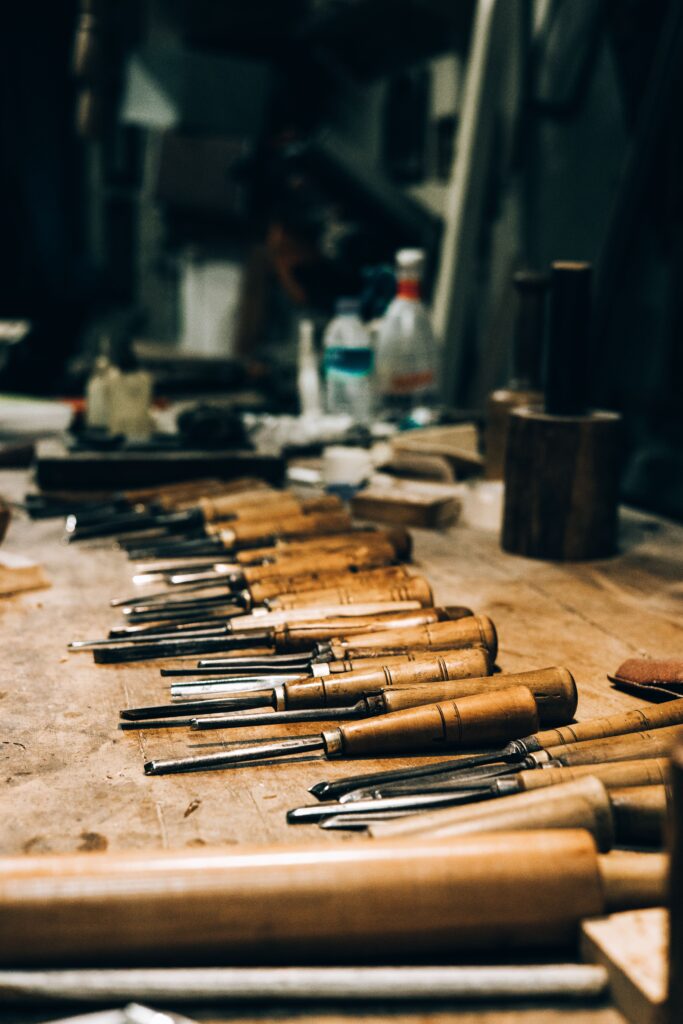
Depending on the chosen course, you can, for example, receive training in’sharpening of hairdressing scissors and grooming tools, of, from woodworking tools or even some cutting tools used in the food industry. Each specialization allows the techniques, equipment, and sharpening gestures to be adapted to the characteristics of the tools in question.
Why take specialized training in sharpening cutting tools?
Mastering the fundamentals of the professionnalprofessional sharpener : does not necessarily mean knowing how to sharpen all tools. Some blades and certain professional applications require specific skills. specific skills and techniques.
Follow a training in sharpening cutting tools allows you to improve your skills, learn to use the appropriate equipment, and work with greater precision and safety. For a sharpening expert already in practice, this specialization also allows you to expand your services and meet the needs of new professionals.
Do you need to already be a professional sharpener to take a specialised training course?
These courses are primarily aimed at people who already have a basic knowledge of professional sharpening techniques and want to develop new professional skills.
However, the prerequisites may vary depending on the chosen training. They ensure that each participant has the necessary knowledge to approach the techniques, equipment, and various tools studied under good conditions. The prerequisites and duration are specified on the page for each training.
Are the sharpening techniques different depending on the tools?
Yes. There is no single technique that cansharpen all cutting tools. The method depends, in particular, on the type of tool, the geometry of its cutting edge, the material of the blade and its use.
Sharpening professional scissors, woodworking tools or knives intended for professional use involves different requirements. A professional sharpener must know how to assess each tool and adapt their technique, settings and equipment to achieve a cutting edge suited to its intended use.
How can specialisation help grow a professional sharpening business?
For one professional sharpener, whether mobile or workshop-basedacquiring new skills makes it possible to work on a wider range of cutting tools and diversify their business.
A specialization can, in particular, allow you to offer your services to new clientel: hairdressers and pet groomers, artisans and companies working with wood, or professionals in the agro-food sector. It thus complements an initial training program and enhances the skills acquired in the professional sharpening trade