

Certificate training
Become a for mobile professional sharpening in 120 hours
Learn the professional techniques and gestures sharpening and prepare to expand your business with individuals and professionals.
- Master the sharpening and grinding techniques
- Acquire the foundations to develop and sell your services
- Depart prepared to launch your itinerant sharpening and grinding business

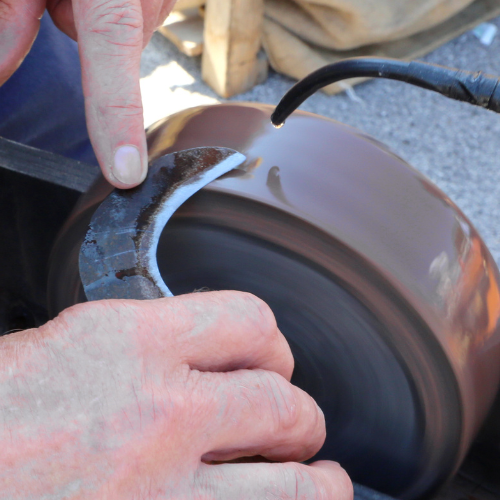
120 hours of training
Become a professional mobile sharpener
% 70 hours of practice on machines
At Escaudain (59)
RNCP certificationXXXXX
Who is this training aimed at?
- You are in the process of changing your career path. You want to learn a new manual and technical trade and build a professional project around sharpening.
- You want to develop a complementary activity. You are already in business and would like to add professional sharpening to your services or develop a new source of income.
- You are just starting out in sharpening. No technical prerequisites are required to complete the training. However, having some knowledge of metalworking is an advantage.
- You like precise and concrete work. The profession is particularly suited to people who are manual, precise, meticulous, orderly, logical, and patient, with a good sense of touch and commerce.

Training Objectives : Mobile Professional Sharpener
- Master professional sharpening techniques. Restoring sharp, cutting and perforating tools by reconciling cutting power and durability.
- Diagnose the tools and adapt its intervention. Identify wear and tear or defects to choose the appropriate technique and equipment.
- Organizing their itinerant activity. Adapt its organization, equipment, and investments to its activity and clientele.
- To develop its commercial activity. Acquire the necessary foundations to prospect, sell your services and develop your business.
Public
Anyone wishing to become a professional sharpener and to carry on that activity on a principal or secondary basis.
Prerequisites
No prerequisites required. Knowledge of metalworking is an advantage.
Duration and rhythm
120 hours of training, with 30 % hours of theory and 70 hours of % practical work on the machines in real-life situations.
Evaluation
Written, oral and practical exams to validate each skill block.
Attention, this training is intense and demanding. You’ll even dream about it at night. I strongly advise you not to think it over; just go ahead and start.
Juan
Upon completion of the training, you will be able to…
Working as a mobile professional sharpener also means knowing how to develop and manage your business. This first block provides you with the necessary skills to structure your project, define your prices and investments, find your clients and sell your services. The goal: to have the foundations in place to transform your technical expertise into a real professional activity.
- Making choices related to his market research
- Implementing health and safety rules to organize your workplace
- Defining the prices to be charged for the equipment
- Designing a commercial strategy and a forecast budget
- Plan for the investments
- To carry out the advertising, commercial prospecting and the sale of its services or products
- Accompanying his clientele
- Advise your clients
- To specify the price of its or its services
- Present a clean, organized workplace that complies with safety regulations
See the RNCP profile

This is the core of the professional sharpener's trade. You learn to observe a tool, understand its wear and tear, and choose the appropriate technique, Before implementing the various sharpening techniques, the goal is not simply to reproduce a gesture, but to know how to adapt your work to each tool and situation.
- Apply the rules of hygiene and safety, particularly those related to the carrying and transport of category D weapons.
- Identify different tools, metals and types of wear: knives, woodworking, stoneworking and gardening tools, scissors, razors, hairdressing and grooming clippers, types of metal, clamping systems and cutting angles.
- Diagnose the wear or defects of a tool and choose the appropriate equipment, machine and technique.
- Master the various cutting-edge maintenance techniques: honing, sharpening, edge sharpening, grinding, deburring, hammering, lapping, micro-bevelling, hollow grinding, burnishing, work hardening, buffing, bright polishing, edge restoration and polishing.
- Using and maintaining sharpening equipment: leather, stones, abrasive belts, grinding wheels, adjustment devices, sharpening pastes and powders.
- Adapt the intervention technique to the type of tool, the defect and the wear encountered.
- Controlling and evaluating the quality of the work performed.
See the RNCP profile
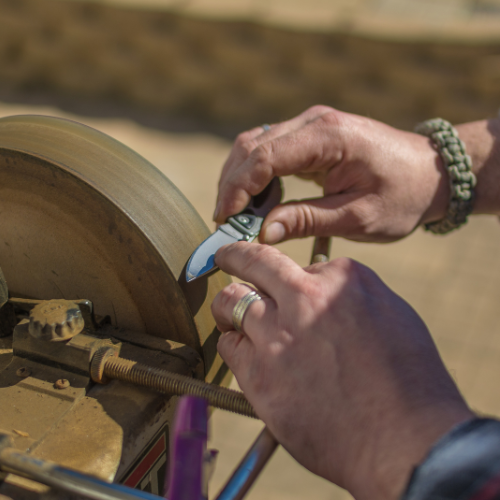
On the program
From knowledge of the tools to sharpening and re-grinding techniques, the training covers all aspects of the profession, not forgetting the development of your future business.
Equipment & techniques
- All the axes, stones and guides
- The means and methods of optimization
- The principles of sharpening and honing
- Hardening and grinding
- Burrs, cutting edges, polishing, filing, setting and hammering.
Hairdressing & grooming
- Sharpening clipper blades and maintaining the various components of hairdressing and grooming clippers, according to type and brand.
- Hair scissors, especially the Hamaguri wire type
- Animal grooming scissors
- Manual razors of the clippers type
Tools & professional fields
All cutting, sharp and/or perforating tools encountered in the trades of:
- food industry
- Gardening and agriculture
- Wood or stone sculpture
- nail art and aesthetics
- leather and fabric
- the building and the livestock
- The hairstyle
- collectible items
Security, tools & metals
- Working with blades: risks and solutions for you and your customers
- Safety measures for handling and transporting sharp objects
- The different types of sharp, cutting and/or perforating tools and how to classify them
- The different types of blades and metals
- Heating and hardening metals
- The different types and thicknesses of cutters and teeth
Developing Your Professional Sharpening Business
- Advice and pedagogy
- The organization, the sale, the services, the marketing
- The image of your company, advertising and prospecting
- Accounting and relations with the accounting firm
- The bank and its relations with professional clients and companies
- The management of the receipt and storage of spare parts, reshipment and warranties
Do you want to go further? Discover the 156-hour training
The training Professional Mobile Sharpener 156 h offers a more comprehensive course to deepen your expertise and expand the services you can offer to your future clients.
In addition to the skills covered in training 120 hours, it also allows you to learn: sharpening of hairdressing scissors and grooming tools and the use of specific equipment.
Have your training funded
The majority of our learners can benefit from a full or partial support for their training as mobile sharpener.
With your CPF
Our training is eligible for the CPF

With another device
For example: Transitions pro, France Travail, AGEFICE, etc…
Self-financing
Exchange about your financing
Do you want to know the financing options available for your training? Depending on your situation and your project, different solutions can be considered.
Contact the FCTV team to review your situation and explore the support options tailored to your training project.
Your path to certification
From training to the final exams, discover the steps that lead you to validate your skills.

Written exam
To validate the knowledge acquired during the training.

Oral examination
To present and mobilize its knowledge within the context of professional activity.
Practical exam
To implement the professional techniques and gestures learned.

Obtaining certification
Professional certification is obtained when the two skill blocks are validated.
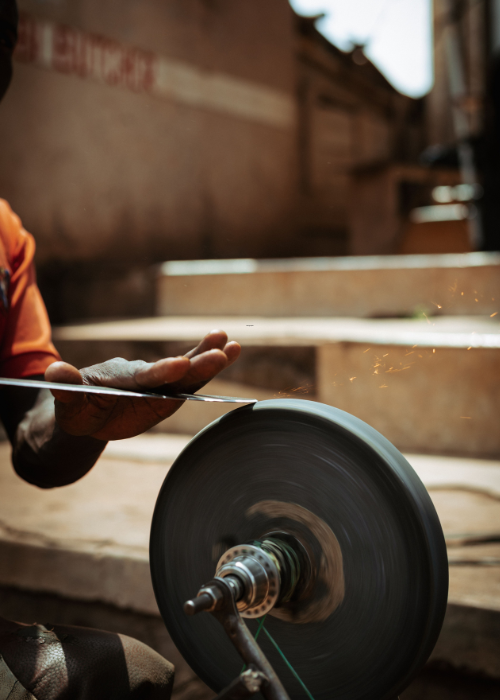
One profession, several ways to practice it
Working as a Mobile Professional Sharpener
Develop your own business and go to meet your customers to ensure the maintenance and restoration of their cutting and sharp tools.
Working with professionals
Offer your services to professionals who use cutting tools on a daily basis: the food service industry, hairdressing and grooming, agriculture, gardening, woodworking, and construction.
Offering its services to private individuals
You also work with private customers to sharpen and maintain knives, scissors, gardening tools, and other sharp tools.
Developing a main or complementary activity
Make professional sharpening your full-time profession or integrate this service into an existing professional activity.
These learners have trusted us for their training as itinerant sharpeners and remouleurs
Is this training right for you?
Are you considering become a professional mobile sharpener, But you still have questions about the program or the funding opportunities? Exchange with the school team. We can inform you about the training options available and help you identify the course that best suits your project and situation.
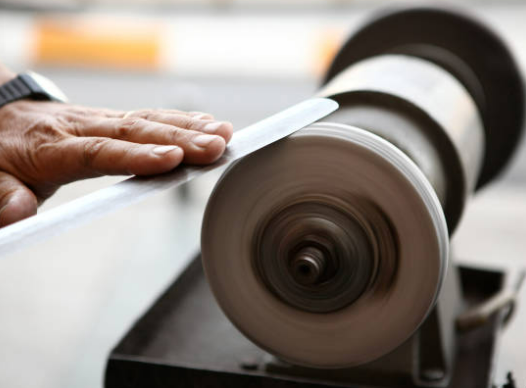
Frequently asked questions
Do I need to already know how to sharpen a knife to follow the training?
No. The training is also aimed at people who are just starting out in professional sharpening. No technical prerequisite is required to join the course. Some knowledge of metalworking can be an advantage, but the techniques, equipment, and handling of the trade are covered during the training.
Is it possible to become a professional sharpener after a professional career change?
Yes. The training can, in particular, be part of a project aimed at retraining individuals into manual, technical and practical professions. It enables them to acquire the skills necessary for sharpening and sharpening tools, while also addressing the aspects related to launching and developing a professional activity.
What tools are taught to sharpen during the training?
The training covers a wide variety of cutting, sharp or perforating tools used by individuals and professionals alike. It includes knives, scissors, gardening and agricultural tools, tools for working with wood or stone, as well as grooming and hairstyling equipment.
The trainees learn to identify the different types of blades, metals, and wear to adapt the sharpening and re-sharpening techniques to each tool.
Can one practice the profession of a remouleur on a freelance basis after completing the training?
The training is designed to prepare trainees to work as a sharpener, either as a primary or complementary activity to an existing one. Beyond the practical aspects of the profession, it covers the organization of the business, the definition of services and prices, investments, prospecting, sales, and the relationship with clients.
Which clients can a mobile sharpener work with?
A sharpening company can offer its services to private individuals but also to many professionals who need to regularly maintain their cutting tools: the food service industry, hairdressers, animal groomers, gardening and agricultural professionals, woodworkers, builders, leather workers and fabric workers.
The itinerant activity allows us to go directly to meet these different customer groups.
What equipment do you need to start your sharpening and grinding business?
The Necessary equipment It depends on the services offered, the tools you want to use, and the organization chosen for your business. The training allows you to discover the various equipment used for sharpening and remolding — including grinding wheels, stones, and guides — and to discuss the investments necessary for the development of your business.